
Rama and Odysseus: Two Heroes, Two Ideas of Greatness in Two Civilizations
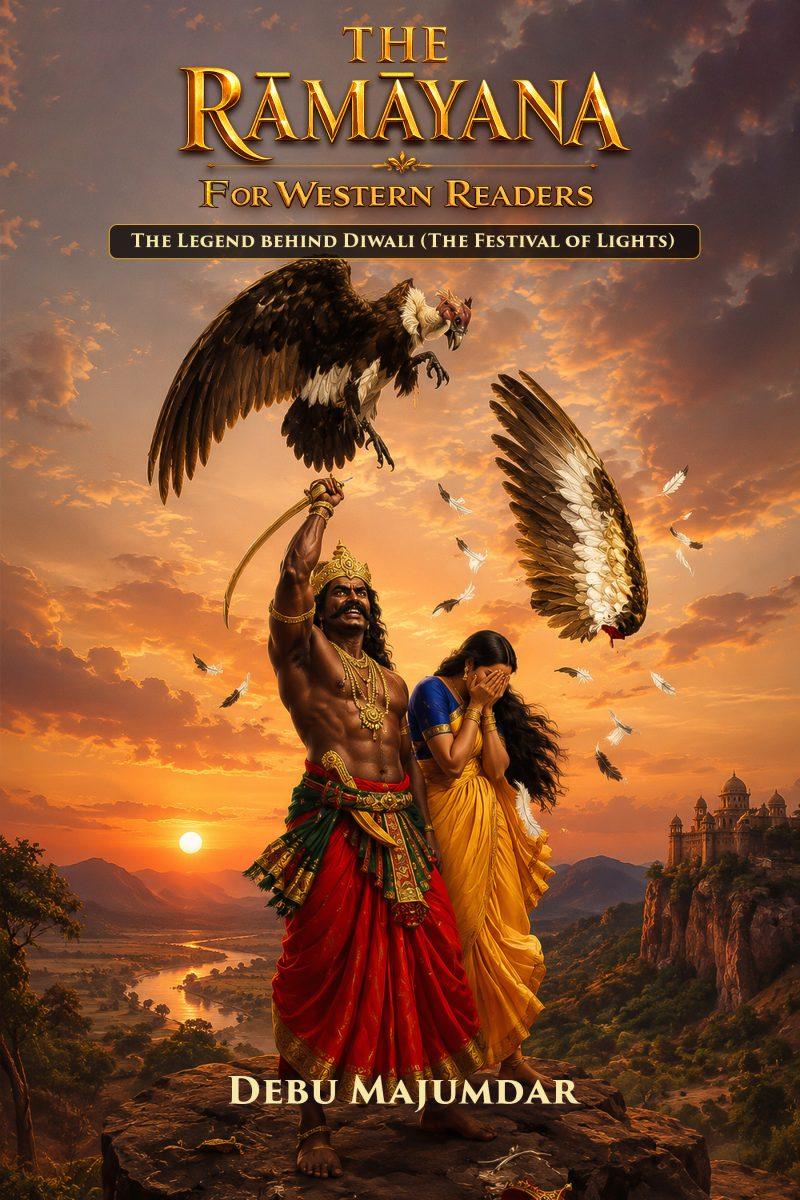
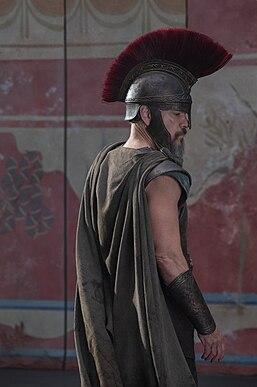
Over three thousand or so years ago, on opposite ends of the ancient world, two civilizations independently produced two epics around the topic of a hero separated from his kingdom and wife, enduring years of ordeal involving difficult struggles, and eventually returning home and securing the wife next to them. India and Greece developed these two epical heroes, The Ramayana’s Rama and the Odyssey’s Odysseus, without any knowledge of each other, and yet the parallels are striking. Comparing them says something real about what ancient societies needed their heroes to be. It also reveals, just as clearly, how differently they answered that need.
The Central Tension:
Exile and homecoming shape both the two epics, but a deeper thread runs beneath the plot: Rama is a hero of duty and moral obligation, while Odysseus is the hero who survives by his wits. Rama represents a moral absolute; Odysseus represents a moral problem as a clever survivor. Each epic also tests the wife’s fidelity in a very different way, and each epic brings its hero home to a very different kind of ending.
Understanding Dharma:
Dharma is essential in understanding the Ramayana. It is the principle that holds life in balance and stable: the way of living that makes life good and worthy. Dharma is multifaceted, encompassing cosmic order, righteousness, duty, conduct, rights, and the moral law that sustains the universe and human society. Rama’s entire arc is a test of whether he will uphold dharma even when it costs him everything he loves.
The Ramayana:
In the Ramayana, Rama willingly gives up the throne and goes into exile for fourteen years to honor the promises his father made. During that exile, the evil king Ravana abducts Rama’s wife, Sita, wanting her to marry him. Rama wins Sita back by killing Ravana in a devastating war, but the reunion is not a simple, happy one. Rama questions Sita’s purity, and she must undergo a trial by fire to prove it. Rama accepts her, but she is exiled again while pregnant, after his subjects continue to doubt her chastity. Sita raises their twin sons alone in a hermitage. Rama wants her back but wants her to prove her purity once more. That is too much for her to bear; she disappeared by jumping into a deep crevice that opened for her call to her mother, the earth.
The Odyssey:
Odysseus answers to the call for the Trojan war, leaving home for ten years, then spends ten more years struggling through one perilous ordeal after another, brought by a vengeful Poseidon, before finally returning with the help of goddess Athena. At home, his wife Penelope fends off suitors who assume Odysseus is dead and presses her to remarry one of them. She uses her intelligence and cunning to stall them—unweaving by night the shroud she claims to be finishing by day—until Odysseus returns in disguise. He slaughters the suitors, passes Penelope’s private test to prove his identity, and the two are happily united.
The Question Each Hero Faces:
What does an epic hero do when doing what is right becomes personally painful? Also, should a king’s subjects have a say in that decision? For Odysseus, the test is largely whether he can survive and find his way home. For Rama, the test repeatedly is whether he can remain faithful to dharma, whatever the personal cost.
The Commonality Between The Epics:
Both heroes are separated from their wives for an extended period: Rama for fourteen years of exile, Odysseus for twenty years—ten of war and ten of wandering at sea. Both wives are besieged in the hero’s absence: Sita abducted and held captive by Ravana, Penelope pursued by suitors who occupy her household and threaten to force her into remarriage. Both heroes reclaim their wives through violence: Rama in open war against Ravana’s army, Odysseus in a sudden, calculated slaughter of the suitors. Both stories treat the wife’s fidelity during the separation as a moral question, subjected to public scrutiny upon the husband’s return. Both heroes are aided by loyal supporters—Hanuman for Rama, Athena for Odysseus.
Both epics remain living religious and cultural texts today. Given that there was no contact between the traditions that produced them, this tells us less about their influence and more about what a “return” story seems to require—a test of the wife’s loyalty. It seems to be near-universal ingredient whenever a culture builds an epic around a husband’s long absence.
Where The Two Heroes Are Alike:
They share real qualities of character: courage, perseverance, loyalty, leadership, extraordinary endurance, and commitment to returning home.
Where They Radically Diverge:
The differences are the real essence of the two epics. Rama is a moral absolute; Odysseus is a moral problem. Rama is, by design, closer to a standard to live up to than a psychologically complicated character. Valmiki wrote him as the ideal man, who upholds dharma even at devastating personal cost. Odysseus, by contrast, is celebrated for being clever, deceptive, and self-interested, and the epic takes delight in his lies, disguises, and manipulations. Greek heroism has room for cunning as a virtue in its own right; Rama’s heroism is defined by never needing to be cunning, because duty tells him exactly what to do.
Two Different Kinds of Greatness:
Neither epic gives us a simplistic hero. Odysseus’s intelligence, cunning, ingenuity, adaptability, mastery of disguise, deception, sheer endurance are precisely what make him such a compelling Western epic hero: his greatness lies in his resourcefulness and his determination to get home by whatever means necessary. Rama’s greatness lies elsewhere: not only in his skill and mastery of the weaponry and as a warrior, but in his unwavering commitment to dharma, which binds him to moral obligations, duty, truthfulness, self-restraint, and the sacrifice of his own desires. He is a hero who lives by principle rather than by instinct. His greatness comes from his willingness to accept obligations even when they conflict with everything he personally wants.
One difference that stands out above the rest: Odysseus’s homecoming is a return to kingdom for his own sake while Rama’s return is for a responsibility to kingdom, for the welfare of his people even when it costs him his own happiness. That’s why his reign became legendary as an ideal kingdom, Ram Rajya—rather than simply a story about a king who made it home.
What We can Learn from Them:
Is the greatest hero the person who achieves his goal—or the one who remains faithful to his principles even when achieving that goal becomes difficult to his own personal happiness? It’s a question with real weight today. We tend to admire success in almost any form, even when it has been built at others’ expense and that success comes from being intelligent, shrewd, cunning, and the other qualifying greatness that Odysseus displayed in pursuing his goal. Where do principles, or other people, fit into that picture? Modern life places many of us under real pressure to choose between our own interests and the interests of others. This becomes apparent when the people who are in charge of a country show other motivations for their actions than for the benefit of the people. Do these two epics inspire us to follow a hero? The Rāmāyana and the Odyssey come from different civilizations, from different religious traditions, and different literary worlds. Yet both ask a question that remains familiar: what does it mean to be a good human being when life places extraordinary demands on you? Odysseus answers through ingenuity, courage, endurance, and an unyielding determination to succeed. Rama answers through duty, self-restraint, sacrifice, and fidelity to dharma even at the cost of his own happiness.
Their journeys are different. Their worlds are different. But both remind us why these ancient epics continue to speak to modern readers.
About Debu Majumdar
Debu Majumdar is the author of The Rāmāyana for Western Readers, What Did the Buddha Teach?, Sacred River: A Himalayan Journey, Night Jasmine Tree, and the Viku children’s books.
