
Penelope and Sita: Two Women Tested by Exile, Separation and Loss
What do Sita and Penelope reveal about loyalty, marriage, endurance and the expectations placed upon women in two ancient epic traditions?
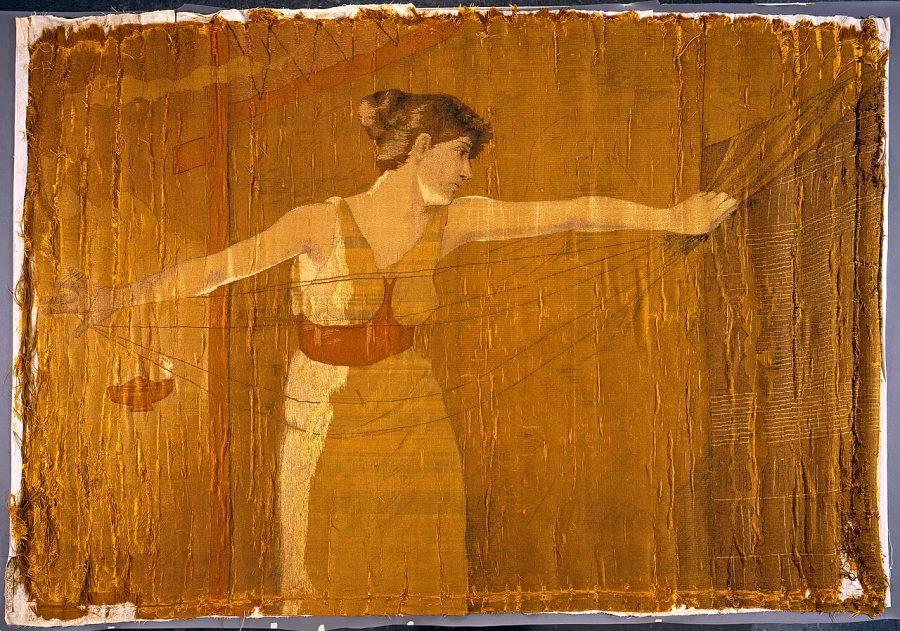
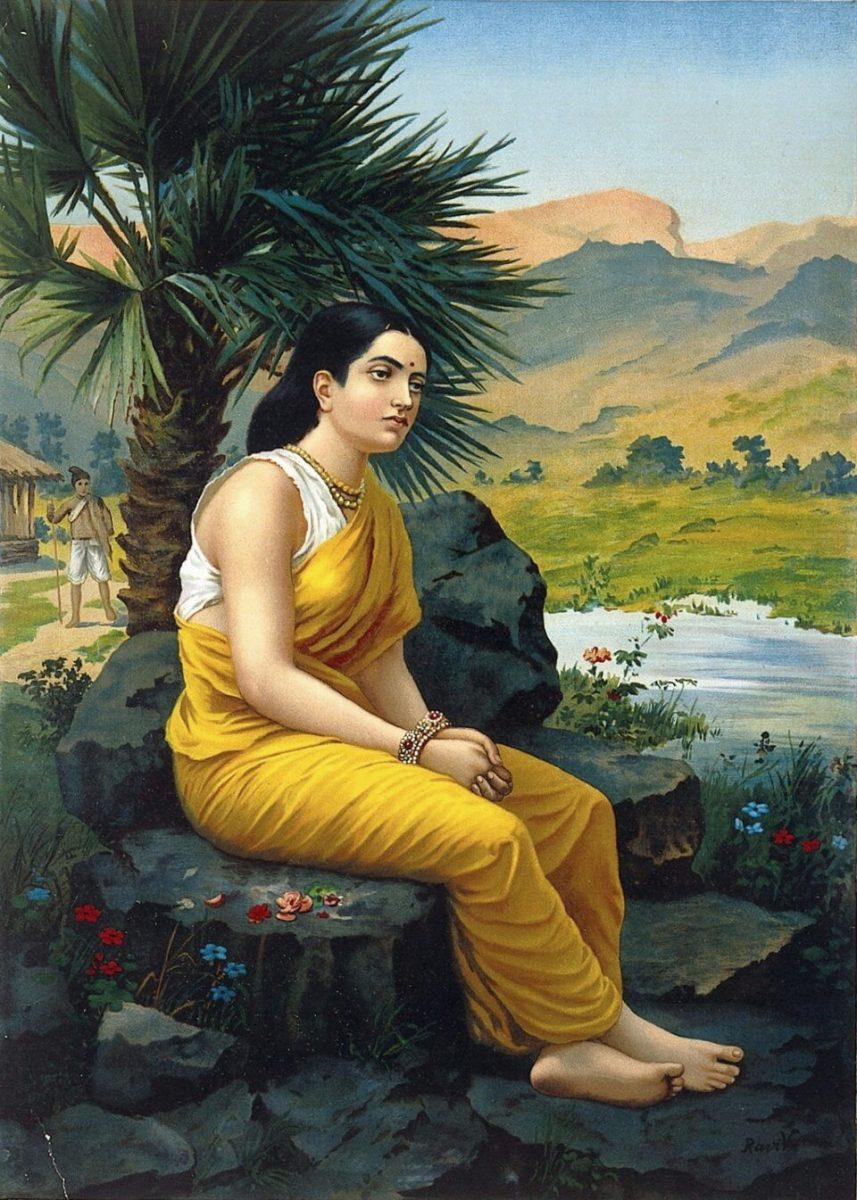
Two faithful women separated from husbands, but share so different outcomes
I recently saw the film The Odyssey and was very impressed with how Nolan gave prominence to Penelope and the fine performance done by Anne Hathaway. This story offers many parallels with another ancient epic from a very different culture, India’s Ramayana. There, another wife, Sita, faces some similar challenges although Sita and Penelope are separated by thousands of miles, different civilizations, and very different ideas about marriage, duty, and a woman’s place in society. Yet they share something fundamental: both remain faithful to husbands who are long absent, and both must endure extraordinary uncertainty. Their similarities, however, end there. Their circumstances, their choices, their forms of agency—and ultimately their fates—are strikingly different.
Sita, facing repeated demands for her purity, finally rises to her independence
Sita is widely revered in India as the wife and eternal consort of Rama, an avatar of Vishnu. She is traditionally viewed as the ideal daughter, wife, and mother, embodying grace, purity, and unwavering loyalty. Yet she is more than a passive ideal of feminine virtue. At several crucial moments she makes decisions of her own: insisting on joining her husband, Rama, in his forest exile, despite the hardships and dangers, and remaining steadfastly faithful during her year-long captivity in Lanka despite threats and uncertainty about whether Rama will ever find her. Her greatest act of independence comes at the end of the tale when, after enduring captivity, rescue, public suspicion, and repeated demands to demonstrate her purity, she ultimately refuses to submit to yet another public test. She calls upon Mother Earth, her mother, to receive her—and disappears into the earth. Sita’s agency is thus unusual. She exercises it most powerfully when she says no: no to remaining behind when Rama goes into exile, no to her captor, Ravana, and finally no to a society that demands another trial of her character.
Penelope tricks her suitors, tests her husband and makes her own future
Penelope’s challenge is different, although she also says no – to her suitors. For twenty years she waits for Odysseus—ten years of war and another ten years of wandering. During his absence, she must protect her household, her son, and the kingdom of Ithaca from a crowd of suitors who assume that Odysseus is dead and pressure her to marry one of them. Penelope does not merely endure. She acts. She invented clever trickery to fend off persistent suitors, claiming she would remarry only after finishing a burial shroud for her father-in-law, secretly unraveling her weaving every night to buy time. She matched her husband’s legendary wits by setting up the final archery contest that only Odysseus could win. Finally, in Homer’s epic, it was she who tested Odysseus, not the other way around. She orders their marriage bed to be moved, knowing that the bed cannot be moved because Odysseus built it around the trunk of a living olive tree and only, he would know that. Penelope’s fidelity is therefore accompanied by intelligence, caution, and active participation. She does not merely wait for events to happen. She shapes them. That was not the situation for Sita and in Indian culture that is unimaginable.
Two societies separated by thousands of miles demand different expectations from their princesses
Fidelity during a husband’s absence is a test for women in both cultures—a standard against which a faithful wife is measured. Both Sita and Penelope passed this test. But the nature of their societies makes their fidelity look very different. Penelope’s struggle is largely domestic. Her intelligence gives her room to maneuver. She protects her home through deception, patience, and strategy. Sita’s struggle is more public and more absolute. During her captivity, her fidelity becomes a matter not merely between husband and wife but of public honor. Even after Rama rescues her, and again after their return to Ayodhya, her chastity remains subject to public scrutiny.
Sita, supposed to be taken care of in Indian culture, ended badly, while Penelope had freedom to act and ended happily
In Indian culture, at least at the time of the Ramayana, a woman is taken care of by father, husband and son; she is the recipient of whatever happens to her and does not have the authority or the power to make her life. Sita acted no differently. Her fidelity is defined by what she withstands, more than by what she does. She never wavered but was never able to act; her power during captivity is entirely the power of refusal, not to maneuver as Penelope did. Sita’s chastity is a public matter for the kingdom, demanded by the subjects, versus Penelope’s fidelity, which she handles herself. Rama banished pregnant Sita rather than give up the kingdom and allow it to be ruled by his brother. Sita’s happiness depended on her husband, who depended on his subjects and thereby Sita’s life ended in tragedy whereas Penelope’s life ended in a happy reunion with Odysseus.
Penelope composed and strategic, Sita showed her human nature
A character is tested under extreme conditions when fear, grief, anger, jealousy, desire, and uncertainty overwhelm ordinary judgment. Sita does not always emerge from such moments without fault. Sita displayed a serious moral and emotional lapse as she did not consciously show any consideration for her sister when the sister’s husband, Lakshmana, accompanied them for fourteen years, and she verbally attacked Lakshmana with ulterior motives during the golden deer event although she admitted her mistakes later. Penelope, by contrast, is remarkable for the composure and strategic intelligence she maintains throughout her long ordeal. It may make her the more strategically capable woman under pressure. Sita’s virtues are real, but so are her moments of weakness. These imperfections do not diminish her character—they make her recognizable as a human being.
Two cultures affected them drastically differently
The deepest difference between Sita and Penelope may lie not in their personalities but in the worlds they inhabit. Penelope and Odysseus restore their marriage through mutual recognition. She tests him, he responds, and their shared private knowledge of their marriage becomes the final proof of identity. Sita’s marriage is entangled with the obligations of kingship.
Can a king rule without sacrificing his personal life?
Rama may love Sita, but he is also king of Ayodhya. He chooses to send pregnant Sita away for the sake of his subjects. The decision is the result of a tragic conflict between personal love and the king’s obligation to satisfy his subjects. That is why Sita’s tragedy is so profound: she does not have to be guilty to be punished. Her final act is therefore both tragic and defiant. In the end two very different social worlds define the two heroines: The Odyssey ends with reunion and restoration. The Ramayana ends with final separation.
For readers who would like to experience the full sweep of India’s great epic, I invite you to read The Rāmāyana for Western Readers. It retells the story in accessible, vivid prose while providing the historical, cultural, and religious background that helps Western readers appreciate its enduring significance.
THE RĀMĀYANA FOR WESTERN READERS – BoTree House
The book will be published on October 2, but the eBook is now available for pre-order.
Kindle: https://a.co/d/0hujQm89
Google Books: https://lnkd.in/gizzcd8x
Apple Books: Search for The Rāmāyana for Western Readers by Debu Majumdar and select pre-order.
About Debu Majumdar
Debu Majumdar is the author of The Rāmāyana for Western Readers, What Did the Buddha Teach?, Sacred River: A Himalayan Journey, Night Jasmine Tree, and the Viku children’s books.
